Rescue Tubes: The Complete Lifeguard's Guide
The lifeguard rescue tube is the single most important piece of equipment a guard carries. This guide covers what a rescue tube is, the different types and sizes, how the materials affect performance, and how to choose one that's actually fit for your environment.
What is a rescue tube?
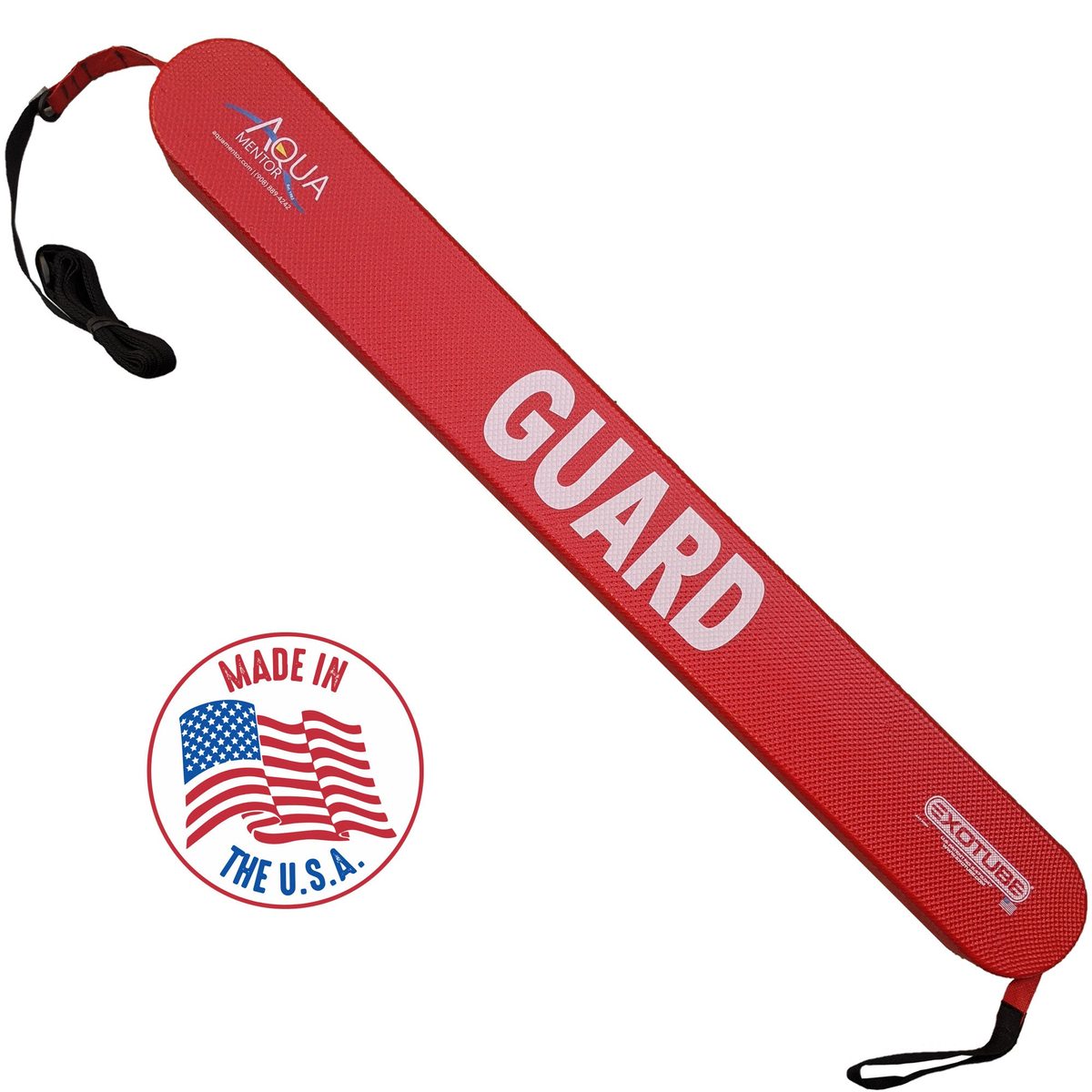
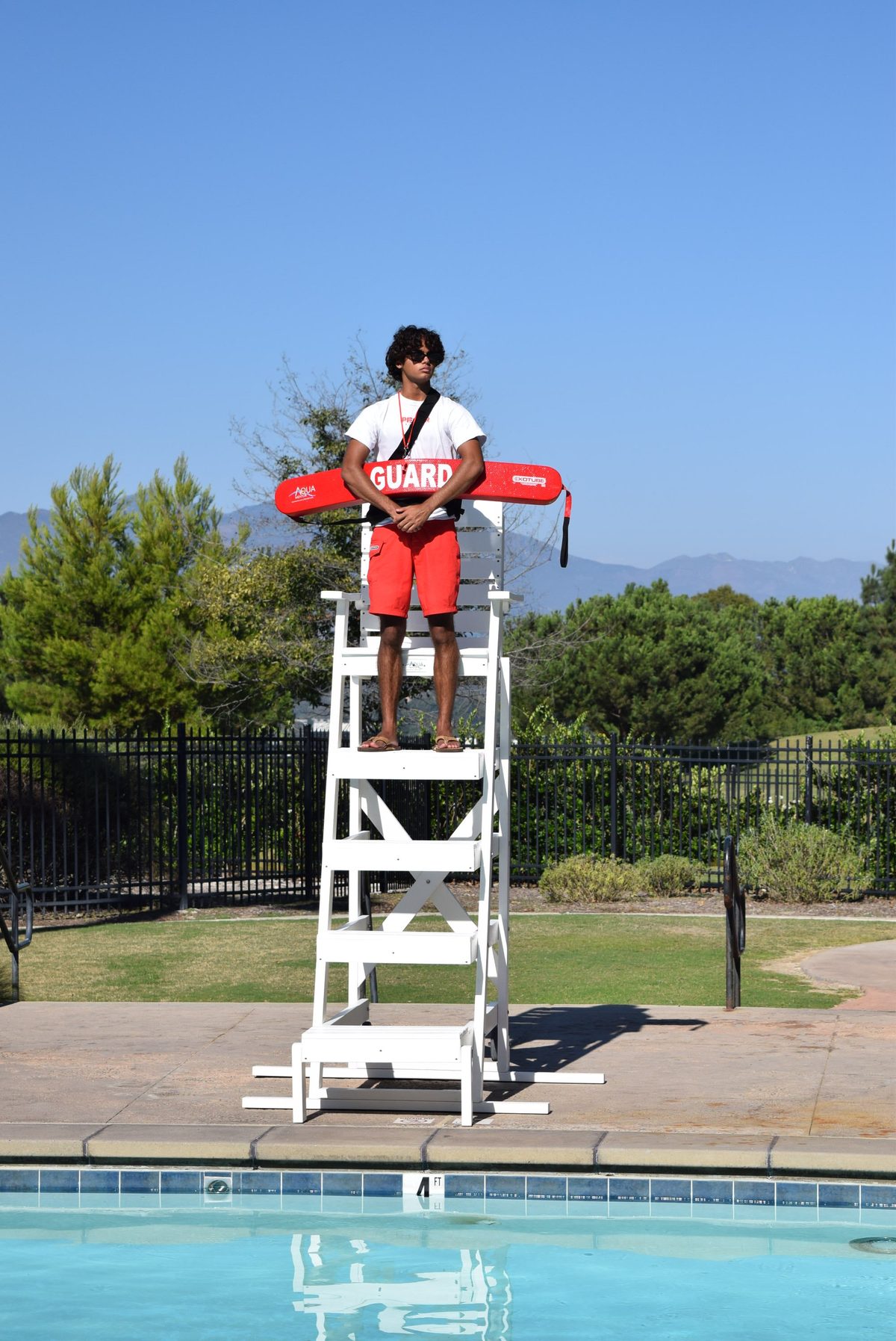
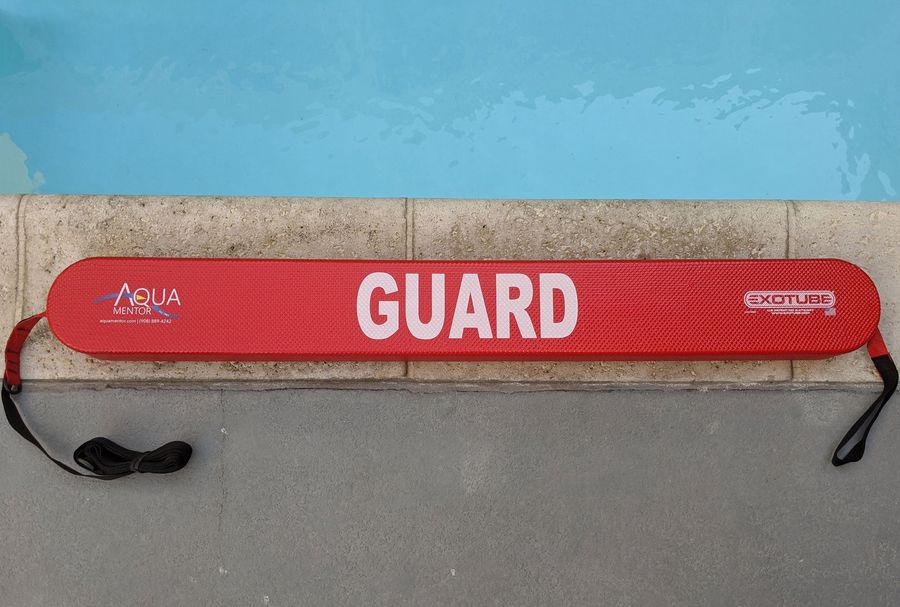
A rescue tube is a buoyant flotation device, roughly cylindrical, used by lifeguards to support a distressed swimmer or active drowning victim during a water rescue. The tube is wrapped around or beneath the victim, providing instant flotation and giving the lifeguard a controllable handle for towing the victim back to safety.
The modern rescue tube is descended from the “torpedo buoy” Pete Peterson developed for the Los Angeles County Lifeguards in the 1930s (see the history of the rescue tube on Wikipedia). Peterson’s design replaced the heavier wooden rescue boards and ring buoys that lifeguards had been using, and it quickly became the standard tool on professional beaches and pools. The design has been refined for over eight decades but the fundamentals — closed-cell flotation, a tow line, and a strap or buckle — haven’t changed.
Rescue tubes are the everyday workhorse of lifeguarding. They're carried over the shoulder during patrol, deployed within seconds of a recognized emergency, and used in nearly every type of in-water rescue a guard performs.
Anatomy of a rescue tube
Every rescue tube has the same four functional parts:
- The flotation body. A length of buoyant material — almost always closed-cell polyethylene foam in a vinyl skin — that provides the lift. Length varies from about 40 to 50 inches; cross-section is typically 6 inches on a side.
- The tow line. A length of rope, usually 6 to 8 feet, attached to one end of the flotation body. The guard wears the line over the shoulder during patrol so the tube trails behind them when they enter the water.
- The shoulder strap or harness. A nylon webbing loop the guard wears across their chest. Stays attached during the swim out so the tube doesn't get lost.
- The buckle clip. Most tubes have brass or stainless clips on each end so the tube can be cinched around the victim's torso once contact is made.
The simplicity of the design is part of the point. Every part is functional. There's nothing to break under pressure, no batteries, no maintenance beyond rinsing salt or chlorine off after use.
Foam vs. inflatable rescue tubes
Two construction types dominate the market: closed-cell foam and inflatable. They are not interchangeable.
A closed-cell foam tube is the standard for professional use. The foam core cannot lose buoyancy if punctured, and the vinyl skin can take impact, abrasion, and UV exposure without compromising performance. Foam tubes have no parts to fail — there's nothing to inflate, nothing to leak, and nothing that requires inspection beyond a visual check for cuts or skin damage.
An inflatable tube is lighter and packs down small, which makes it appealing for environments where storage matters — small craft, remote rescues, individual personal use. The trade-off is that any breach of the bladder reduces buoyancy to zero. Inflatables also degrade faster under repeated use because the seams and valves are wear points.
For any aquatic facility that runs daily lifeguarding operations — pools, water parks, beaches, summer camps — the closed-cell foam tube is the only defensible choice. We cover the trade-offs in detail in foam vs. inflatable rescue tubes.
Sizes and length
Rescue tubes are sold in three main lengths: 40 inches, 45 inches, and 50 inches. The longer the tube, the more buoyancy it provides and the more victims it can support at once.
| Length | Typical buoyancy | Best for |
|---|---|---|
| 40" | ~30 lbs | Small pools, kid swim programs, shallow water |
| 45" | ~35 lbs | Standard pools and most aquatic centers |
| 50" | ~40+ lbs | Deep water, surf, multiple-victim scenarios, larger adult victims |
Many head guards default to ordering 45-inch tubes because that's what their predecessor used. That's worth questioning. A 50-inch tube is the right call for any facility with deep water, ocean exposure, or the realistic possibility of a guard pulling more than one victim at a time. The extra length costs almost nothing and gives the guard meaningful margin in the cases where margin actually matters.
For more on this, see our breakdown of rescue tube sizes and length.
How a rescue tube is used
Rescue tube technique varies by victim condition. The three core scenarios every guard trains for:
Distressed swimmer (conscious)
The victim is fatigued or struggling but still aware and responsive. Approach with the tube in front, push it within reach, and instruct the swimmer to grab on. Keep the tube between you and the victim — never let a panicked swimmer pull you under.
Active drowning (conscious, panicked)
The victim is in instinctive drowning response: vertical body, mouth at water level, no breath for speech, climbing motion with the arms. They will not respond to verbal instruction and will grab anything in reach. Approach behind them when possible, push the tube under their armpits, and clip it around their chest. Tow on your back.
Unconscious / non-breathing
Approach, place the tube under the victim's torso, and use it as a stable platform to begin in-water rescue breathing as you tow toward the wall or shore. The tube becomes a flotation backboard.
Detailed technique walkthrough: how to use a rescue tube.
Standards and regulations
In the United States, rescue tubes are not federally regulated as personal flotation devices (PFDs) — they are professional rescue equipment, not life jackets. State and county aquatic codes generally specify that lifeguards must carry "a rescue tube or equivalent buoyant rescue aid" while on duty, but rarely prescribe a specific length or material.
The American Red Cross Lifeguarding curriculum and the YMCA Aquatic Safety Standards both reference the rescue tube as the primary in-water rescue device and specify that guards should be trained on its use as a condition of certification. Ellis & Associates, the largest private lifeguard training and audit company in the US, requires rescue tubes meeting their specifications at all client facilities. The United States Lifesaving Association publishes the corresponding standard for open-water and beach lifeguarding.
Practically: any commercial pool, water park, or beach in the US is going to expect a closed-cell foam tube of at least 40 inches at every guard station. Anything less will fail an audit.
Choosing the right tube
The decision tree is short:
- Closed-cell foam, always. Inflatable tubes are not appropriate for facility use.
- 50-inch length if you have deep water, ocean exposure, large adult victims, or any chance of multi-victim incidents. 45-inch for typical pool and aquatic-center duty. 40-inch only for small or shallow pools where the smaller tube is easier to manage.
- UV-stable vinyl skin. Cheaper tubes use a thinner vinyl that cracks and chalks within a season of sun exposure. Pay attention to skin spec.
- Brass or stainless clips. Plastic buckles are a known failure point in salt water and chlorine.
- Replaceable line. The tow line wears faster than the body. A tube that lets you replace just the line saves money over its life.
The 50-inch ExoTube
Aquamentor's ExoTube is a 50-inch closed-cell foam rescue tube built specifically for the deep-water and multi-victim scenarios where length matters. Patented grip technology, closed-cell polyethylene core, UV-stabilized vinyl skin, brass clip hardware, and a replaceable tow line. Made in the USA in Garwood, NJ since 1983.
Get a quote on the ExoTubeCare and maintenance
A well-cared-for foam rescue tube lasts five to seven seasons. Care is simple but the things that kill tubes are predictable:
- Rinse with fresh water after every shift if used in salt water or chlorinated pools. Salt eats hardware; chlorine attacks the vinyl skin.
- Don't store in direct sunlight. UV exposure ages vinyl. Hang in a guard shack, locker, or under cover.
- Check the line monthly. Replace if you see fraying, glazing, or any sign of damage near the splice or clip.
- Inspect the skin for cuts. Surface cuts can be patched with vinyl repair adhesive. Deep cuts that expose the foam mean retire the tube.
- Don't sit on it. Repeated compression breaks down closed-cell foam over time.
Related articles
-
How to Use a Rescue Tube: Technique Guide
Approach, contact, control, and tow — the four phases of an in-water rescue and how the tube fits into each.
-
Rescue Tube Sizes: Why Length Matters
The trade-offs between 40, 45, and 50-inch tubes, with environment-by-environment recommendations.
-
Foam vs. Inflatable Rescue Tubes
Why every professional aquatic facility uses closed-cell foam — and why inflatables exist anyway.
-
Choosing Rescue Tubes for Your Aquatic Facility
A buying framework for head guards and facility managers — quantity, sizing, and replacement cycles.
-
Rescue Tube vs. Ring Buoy: When to Use Which
Rescue tube and ring buoy are not interchangeable. A practical comparison — buoyancy, technique, regulatory positioning, and which is right for your environment.